

Key Takeaways
- Inventory accuracy, supply-chain collaboration, and order automation move margin directly
- A centralized dashboard turns sales/inventory/customer data into daily decisions
- Customer engagement and loyalty lift retention when systems know the customer
- Employee tools for scheduling, QC, and reporting reduce bottlenecks across shifts
In today’s fast-paced business environment, manufacturing and retail companies are constantly seeking innovative solutions to streamline their operations, enhance productivity, and maximize profitability. One such solution that has gained significant attention is the development of custom software tailored specifically to the needs of these industries. In this blog post, we will explore the various ways custom software can benefit manufacturing and retail companies, ultimately transforming their processes and propelling them toward success.
Streamlining Inventory Management
Custom software can integrate seamlessly with existing inventory management systems, providing real-time visibility into stock levels, orders, and fulfillment processes. With automated tracking and alerts, manufacturers and retailers can efficiently manage their inventory, reduce overstocking or stockouts, optimize supply chain operations, and improve customer satisfaction.
Enhancing Supply Chain Collaboration
Collaboration is essential in manufacturing and retail, involving multiple stakeholders such as suppliers, distributors, and logistics partners. Custom software can serve as a centralized platform, facilitating seamless communication, data sharing, and coordination among all parties. This improves supply chain visibility, reduces delays, enables better forecasting, and fosters stronger relationships throughout the network.
Streamlining Order Management
Processing and fulfilling orders efficiently is crucial for customer satisfaction and repeat business. Custom software can automate the entire order management process, from order placement to tracking shipments and managing returns. By eliminating manual tasks and reducing errors, companies can improve order accuracy, reduce lead times, and enhance the overall customer experience.
Enabling Data-Driven Decision-Making
Custom software can integrate various data sources, such as sales, inventory, and customer information, into a centralized dashboard. This empowers decision-makers with real-time insights and actionable analytics. By leveraging this data, manufacturers and retailers can make informed decisions, optimize operations, identify market trends, and personalize customer experiences, ultimately driving revenue growth.
Enhancing Customer Engagement
In the digital age, customer engagement plays a vital role in brand loyalty and market competitiveness. Custom software can offer features like personalized product recommendations, loyalty programs, and interactive customer support, enabling manufacturers and retailers to build stronger connections with their customers. By delivering a seamless and tailored experience, companies can enhance customer satisfaction and drive repeat business.
Enjoyed this insight?
Explore how Letter B turns the same challenge into an operational win.
Common questions about manufacturing modernization
Inventory accuracy with real-time alerts, supply-chain collaboration with shared data, and order automation from capture to fulfillment. Each reduces delay and over/under-stock cost.
Related insights
View all
What Is Smart Manufacturing? Practical Examples for Small and Mid-Sized Manufacturers
A plain-English guide to smart manufacturing: connected systems, IoT sensors, RFID tracking, predictive maintenance, and where smaller plant...
Read article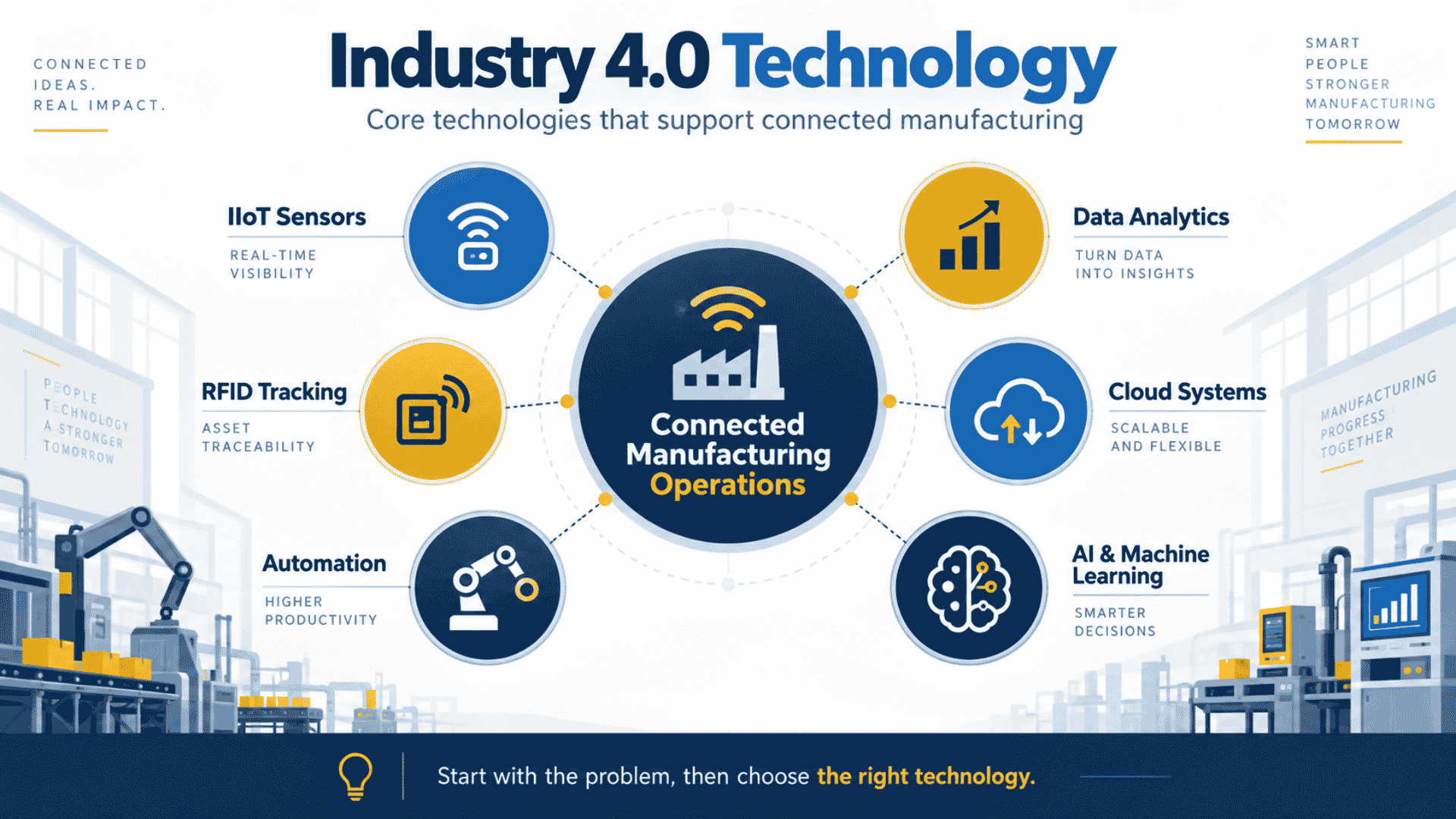
Industry 4.0 Technology: What It Means for Manufacturers in 2026
Industry 4.0 technology connects equipment, software, data, and business systems so manufacturers can improve how work moves through the ope...
Read article
Where Modern Manufacturing Technology Replaces Legacy Systems in Manufacturing in 2026
Modern manufacturing technology does not require replacing everything at once. Many improvements focus on the areas where inefficiencies hav...
Read article